
By the RHINO MUD Editorial Team
In the world of men’s grooming, a quiet deception is being bottled by the millions and sold to an unsuspecting public. It is a scheme of dilution so pervasive that it has become the industry standard, masquerading under the guise of "hydration."
If you look at the back of your current face wash or moisturizer, the first ingredient listed—often comprising 70% to 80% of the entire container—is Aqua. Water.
To the casual observer, water sounds benign, even healthy. But in the predatory world of mass-market cosmetics, water is the "Great Diluter." It is a cheap filler used to inflate profit margins, and it brings with it a host of chemical dependencies that are waging a silent war on your skin’s natural biology.
The Profitability of "Empty" Volume
From a manufacturing standpoint, water is the ultimate asset. It costs next to nothing, it provides bulk, and it allows companies to market a "large" 8-ounce bottle for a premium price. However, once that water is introduced into a formulation, the chemistry changes from a "nutrient delivery system" to a "preservation crisis."
Water is a breeding ground for bacteria, mold, and fungi. To keep a water-based lotion shelf-stable for two years in a warm bathroom, manufacturers must stabilize it with a toxic cocktail of synthetic preservatives. This is where the trouble begins.
The Chemical Dependencies of Dilution
When you buy a water-based product, you aren't just buying water; you’re buying the chemicals required to keep that water from rotting.
- Parabens and Phenoxyethanol: These are harsh biocide preservatives necessitated by the presence of water. Many have been flagged as potential endocrine disruptors, mimicking estrogen in the male body.
- Synthetic Emulsifiers: Since oil and water don't naturally mix, companies use PEGs (polyethylene glycols) to force them together. These synthetics can strip the skin’s natural lipid barrier, leading to the very dryness the product claims to "cure."
- The "Alcohol Sting": To ensure the water evaporates quickly so the product doesn't feel "slimy," alcohol is often added. This creates a fleeting cooling sensation while simultaneously dehydrating the deeper layers of the dermis.
The RHINO MUD Alternative: Why Waterless is the Only Logic
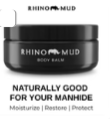
At RHINO MUD, we operate on a different set of principles: Anhydrous (Waterless) Formulation. By removing the water, we remove the need for the chemical "police force" required to guard it. Our products are 100% active. When you apply the FACE SERUM Anti-Aging Balm, you aren't applying 80% filler; you are applying a concentrated matrix of wild-harvested botanicals.
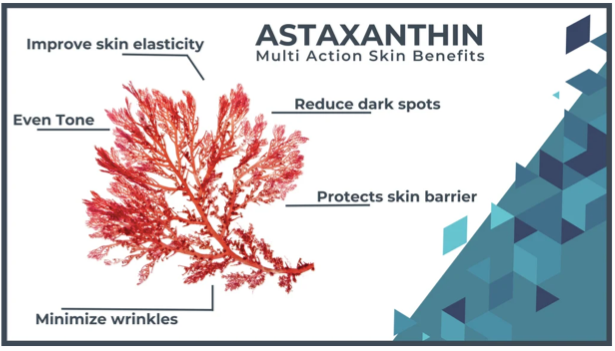
Because there is no water, we can utilize high-potency ingredients like Astaxanthin and Bakuchiol in their raw, undiluted states. These are the heavy lifters of skin repair, and they don't need a sea of cheap tap water to do their job.
The Biological Reality
Your skin is semi-permeable, but it is also a protective shield. When you apply a water-based lotion, much of it simply evaporates into the air, taking some of your skin’s own moisture with it—a process known as trans-epidermal water loss.
In contrast, a botanical balm mirrors the natural sebum (oil) produced by your skin. It creates a breathable, protective barrier that holds moisture in while delivering nutrients down.
Conclusion: Refuse the Dilution
The "Big Skincare" model relies on you not reading the label. They want you to believe that "more is better," even when that "more" is just tap water wrapped in a fancy label.
It is time to stop paying for the Great Dilution. Your skin deserves the raw, concentrated power of the earth—not the chemical byproducts of a cost-cutting manufacturing process.
Explore the Waterless Revolution at www.rhinomud.com.
Leave a comment
This site is protected by hCaptcha and the hCaptcha Privacy Policy and Terms of Service apply.