
Most men treat skincare like a utility. You walk into a department store, grab a top or mid-level brand that says, "Men’s Moisturizer" and assume that if it’s on the shelf, it’s safe.
But behind the rugged charcoal-grey packaging and the "Sandalwood" scent lies a dirty industrial secret: Most mainstream men’s grooming products are chemically engineered for shelf-life and profit, not for human health. Because men generally have thicker skin and larger pores, they are often the targets for "heavy-duty" formulas packed with aggressive industrial surfactants and cheap fillers.
If the first ingredient on your bottle is "Aqua" (Water), you aren't just paying for a diluted product—you are paying for a toxic chemical cocktail designed to keep that water from growing mold. Here are the seven most toxic chemicals currently hiding in men’s skincare, and why it’s time to move toward a waterless, botanical defense.
1. Parabens (The Endocrine Saboteurs)
-
On the label: Methylparaben, Propylparaben, Butylparaben, Ethylparaben
-
What they are: Cheap synthetic preservatives used to prevent bacteria growth in water-based lotions.
-
The Danger: Parabens are "xenoestrogens," meaning they mimic estrogen in the body. For men, this is a direct hit to your hormonal balance. Studies have linked parabens to decreased testosterone levels and lower sperm counts. Because they are absorbed directly through the skin into the bloodstream, they bypass the digestive system’s natural filters, leading to long-term systemic exposure.
2. Phthalates (The Hidden "Fragrance" Trap)
-
On the label: Diethyl phthalate (DEP), or simply "Fragrance / Parfum."
-
What they are: Plasticizing chemicals used to make scents last longer on your skin and to keep lotions pliable.
-
The Danger: Under current labeling laws, companies can hide hundreds of chemicals under the single word "Fragrance." Phthalates are notorious endocrine disruptors linked to reproductive issues and "male feminization" in developmental stages. If your moisturizer smells like a chemistry lab’s version of a "Cool Breeze," you’re likely absorbing phthalates
3. Sodium Lauryl Sulfate (SLS) & SLES (The Engine Degreasers)
-
On the label: Sodium Lauryl Sulfate, Sodium Laureth Sulfate
-
What they are: Surfactants that create the "foaming" action in face washes and body bars.
-
The Danger: SLS was originally designed as an industrial degreaser for heavy machinery. It is highly effective at stripping oil—so effective that it destroys your skin's acid mantle (the natural oily shield that protects you from bacteria). This leads to a "rebound effect" where your skin overproduces oil to compensate, causing more breakouts and chronic irritation.
4. Formaldehyde-Releasers (The Embalming Agents)
-
On the label: DMDM hydantoin, Quaternium-15, Imidazolidinyl urea.
-
What they are: Chemicals that slowly release small amounts of formaldehyde over time to keep a product "fresh" on a warehouse shelf for years.
-
The Danger: Formaldehyde is a known human carcinogen. While the amounts released are small, the cumulative effect of using these products daily—shaving cream, face wash, and moisturizer—creates a "low-dose" toxic load that is linked to skin allergies, joint pain, and even cancer.
5. Synthetic Silicones (The Pore-Cloggers)
-
On the label: Dimethicone, Cyclomethicone, Cyclopentasiloxane.
-
What they are: Plastic-like polymers used to give lotions a "silky" or "smooth" feel.
-
The Danger: Silicones don't actually moisturize your skin; they create a plastic film over it. This "seal" traps sweat, bacteria, and dead skin cells underneath, which is a recipe for cystic acne and congested pores. For active men, this synthetic barrier prevents the skin from "breathing" and regulating temperature during a workout.
6. Triclosan (The Antibiotic Aggressor)
-
On the label: Triclosan, Triclocarban.
-
What they are: Antibacterial agents often found in "Deodorant Soaps" and "Acne Washes."
-
The Danger: Triclosan is so aggressive that it has been linked to the rise of antibiotic-resistant "superbugs." It is also a suspected thyroid disruptor. In 2016, the FDA banned it from hand soaps, but it still sneaks into many men’s specialized shaving and skincare products under the guise of "antimicrobial protection."
7. Mineral Oil & Petroleum (The Breathable Barrier Killers)
-
On the label: Paraffinum Liquidum, Petrolatum, Mineral Oil.
-
What they are: Byproducts of the oil refining process (yes, the same industry that fuels your car).
-
The Danger: Petroleum derivatives are cheap fillers. Like silicones, they sit on top of the skin, offering no nutritional value while blocking the skin’s ability to eliminate toxins. Long-term use can lead to "skin laziness," where your body stops producing its own natural moisture because it's smothered in a layer of crude oil byproduct.
The Solution: Why "Waterless Balms" are the Future of Men’s Skincare
The common thread among almost all these toxins is Water. When a brand puts 80% water in a bottle, they are forced to use parabens and formaldehyde-releasers to prevent that water from rotting. They are forced to use SLS to make the water foam, and silicones to make the water feel "creamy."
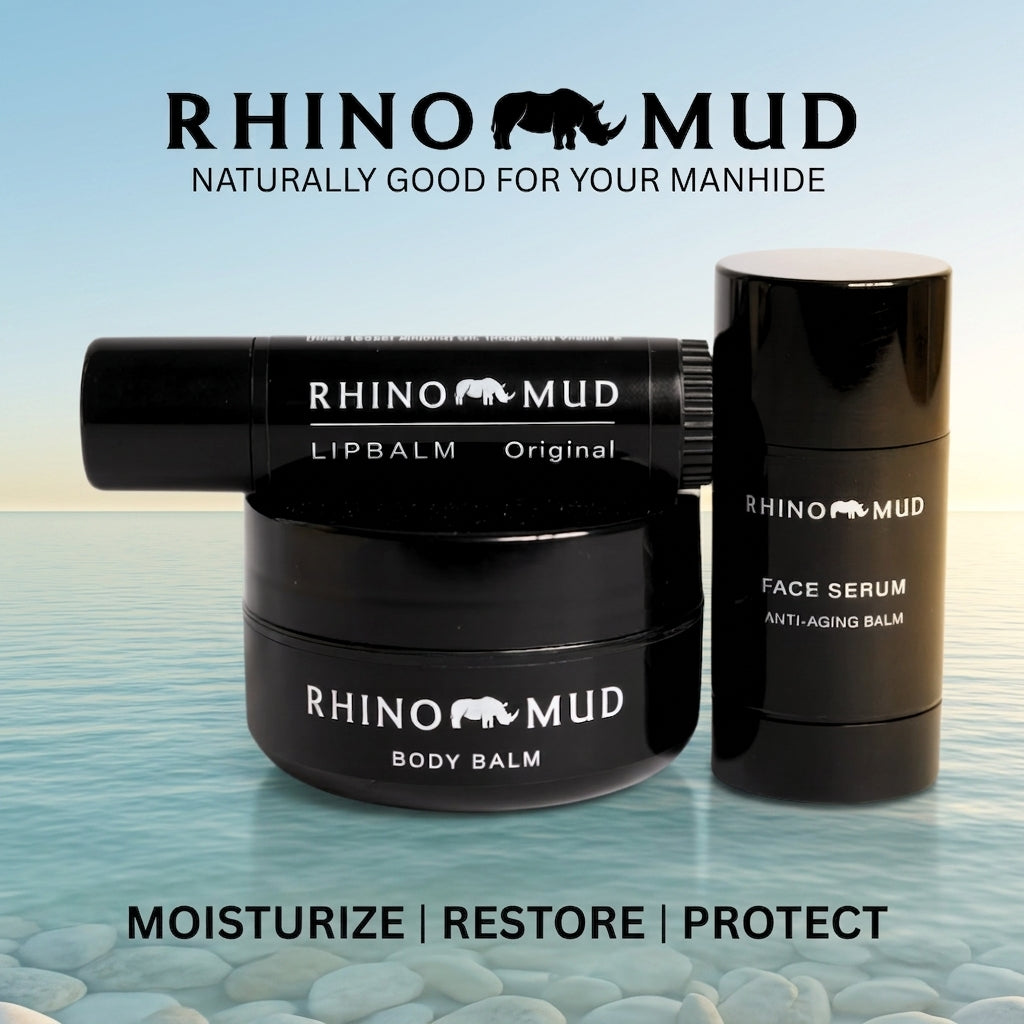
RHINO MUD was built on a different philosophy: Anhydrous (Waterless) Performance. By removing water, we remove the need for 90% of the industry’s toxic "necessities." Instead of synthetic fillers, we use:
-
Organic Beeswax: A natural, breathable barrier that protects without clogging.
-
Virgin Coconut Oil: Naturally antimicrobial without the thyroid-disrupting side effects of Triclosan.
-
Wild-Harvested Botanicals: 100% active ingredients that stay on the skin rather than evaporating.
The Verdict
Your skin is your largest organ and your first line of defense. If you wouldn't eat these chemicals, you shouldn't be rubbing them into your pores every morning. It's time to stop paying for toxic water and start investing in a concentrated, waterless balm that works as hard as you do.
Ready to ditch the chemicals? Explore the RHINO MUD Waterless Collection and see the difference 100% active ingredients make.
Leave a comment
This site is protected by hCaptcha and the hCaptcha Privacy Policy and Terms of Service apply.